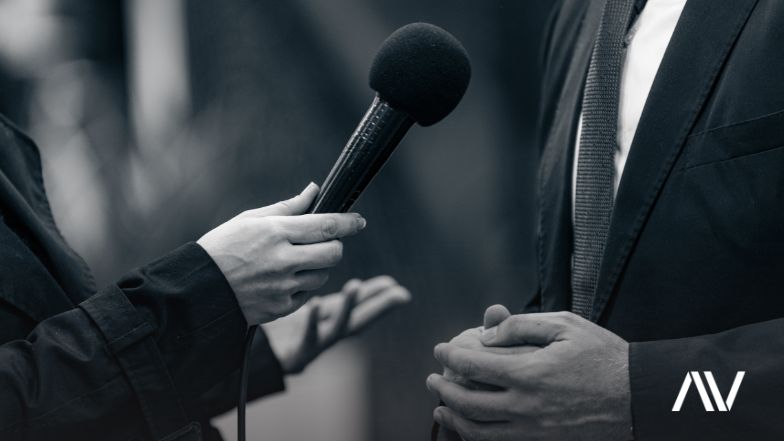
And you, are you prepared to give a media interview? The answer was: of course! Let’s do an exercise, I proposed. The results showed us that even the most confident spokesperson who does not have the tools to face the media can put their brand at risk.
These situations can easily be avoided with “media training” or media coaching, which is a training course that provides participants —directors, senior officials or organization leaders— with the techniques and skills to communicate their messages effectively, keep control of a press interview and properly handle criticism or difficult questions.
Undoubtedly, even the most expert spokesperson with total command of their business needs a media training session, one that includes continuity through practical exercises and simulated scenarios where they can strengthen their communication skills.
A fairly graphic example of a spokesperson who did not know how to handle a critical television interview was the former president of Mexico, Vicente Fox, who in October 2007 took part in the program “En Contexto” on Telemundo. Fox had previously stated that neither he nor his family owned any properties; however, the interviewer asked him about information indicating otherwise. Feeling the need to respond, he lost his composure, gave no concrete answer and chose to get angry, insult the interviewer and leave the studio.
A press interview can become a great opportunity or lead to a crisis situation if the spokesperson is not sufficiently prepared, with knowledge of the outlet and the interviewer, their journalistic leaning or other aspects that may be vital before the meeting takes place.
The experience of having taken part in numerous “media trainings” has taught us that there will always be some detail to correct or improve in order to communicate more effectively. From the spokesperson who is truly a wealth of knowledge to the one who turns a communication crisis into an opportunity to highlight their company’s good image, it is always useful to be trained and also to have up-to-date information, market or company figures and a list of useful tips at hand to help face the media in the best possible way.
After the experience of media training, the spokesperson’s view of an interview tends to change, and they will also be able to appreciate, alongside their communication specialist, their growth from before to after the exercise.
As support work prior to the interview, the public relations professional should prepare a document or briefing note listing the journalist’s and the outlet’s details, the profiles of both, key messages, market figures, company figures and difficult questions; and don’t forget to accompany this document with some tips for conducting a successful meeting with the press, such as those we offer you below.
- Speak clearly, use understandable and simple language. Think that you are addressing a mass audience and that you must be as clear as possible. Avoid technical jargon and complicated words.
- Know the outlet and the journalist. Ask your public relations agency for information on both, as well as a list of topics they have covered in recent months or whether they have been linked to your company’s activity.
- Put the truth first. Your best weapon for carrying out a successful interview is to always speak the truth. It will build a good reputation and position you as an opinion leader on the subject.
- Stay calm when faced with an uncomfortable question. Do not answer hastily; analyze the question and give a short, forceful answer that serves as a bridge to highlight an achievement and thus turn the situation around.
- Never make “off the record” statements. In the Vicente Fox video, he ends the interview; however, the cameraman kept recording until the interviewee left the channel, capturing all the comments and annoyances that emphasized his critical image during that encounter.
Remember that media training can make the difference between a company spokesperson with clear messages and defined objectives; and a leader who loses valuable opportunities from which their competition is already benefiting.
Characteristics of media training for spokespeople
-
Importance of media training
- Prevents risks to the brand’s reputation.
- Develops effective communication skills.
- Anticipates problematic situations.
-
Training content
- Techniques and skills to communicate effectively.
- Handling press interviews and difficult questions.
- Practical exercises and simulated scenarios.
-
Importance of preparation
- Knowledge of the outlet and the journalist.
- Honesty and ability to respond to uncomfortable questions.
- Avoiding “off the record” statements.
-
Benefits of the training
- Improved communication effectiveness.
- Personal and professional growth of the spokesperson.
-
Preparation before the interview
- Having prior information from the public relations professional.
- Receiving tips for a successful interview.