An American tycoon who revolutionized marketing and public relations
I have a special fondness for World History, which leads me to look for historical or period series. Not only because they present the events or moments that marked the life of civilizations, but because of the lessons we can learn from our ancestors. From their way of thinking, acting, dressing and eating to the decisions that affect us today; History is an inexhaustible source of lessons with which we will continue to live.
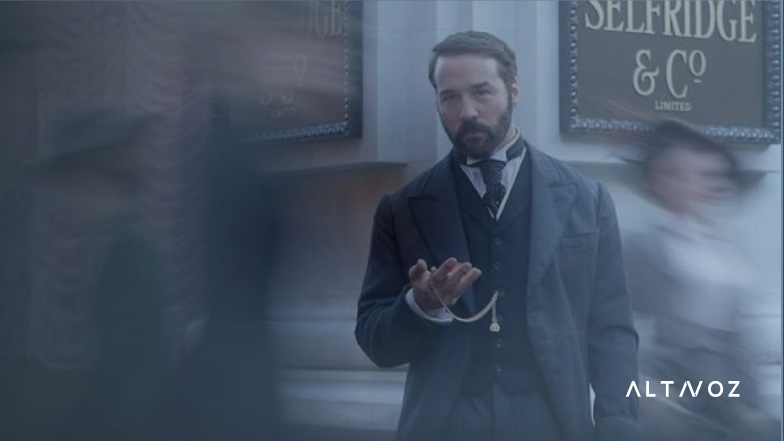
Browsing Netflix, I found the series Mr. Selfridge, a story based on real events that tells the story of Harry Gordon Selfridge, an American tycoon who arrived in England in 1908 to revolutionize the way the English shopped.
At the beginning of the 20th century, London was a rather conservative society with very strict moral codes, which was also reflected in its department stores, gloomy and somber, where it was not allowed to enjoy the shopping process, much less experiment with the senses. Thus, when a customer went to look for a product, the shop assistant offered strictly what was asked for and there was no option to look at or touch other alternatives. The phrase “I’m just looking” was synonymous with no purchase or a waste of time.
Selfridge was an innovative, visionary, ambitious and risk-taking businessman who spared no money or effort in seizing every opportunity that came his way to close a sale and grow his business. He capitalized even on moments of crisis to keep engaging and communicating with the London public, which was eager to be part of the style, glamour and theatricality that this new shopping trend offered. As Selfridge would say: “Let’s have a little fun”.
And it is precisely part of that fun that is experienced today in our department stores, which adopt —perhaps without knowing it— the marketing and public relations techniques this figure left us.
• Entertain to communicate or communicate to entertain.
At Selfridge’s stores, communication was aimed at entertaining customers, especially the middle-class ladies who sought to enjoy fashion and shopping. The place became a new concept in which they were the protagonists who could make their dreams come true. Harry turned the beauty department, long relegated to the farthest corner, into his customers’ first contact with the store. They could perceive the aromas and textures of the products as soon as they walked in, just as today. That way, they were part of a sensory experience that evoked memories, places and nostalgia, more than enough reasons to make a purchase.
• Sales are welcome.
No store in London in the early decades of the 1900s would have imagined holding a “one-day sale” to attract more customers and boost sales. Products had a fixed price that had to be respected, always. However, this businessman analyzed his customers’ behavior and put himself in their shoes to offer them an attractive deal: pay less for a garment for just one day. Could that be enough to move them? Of course. People came to the store to get bargains and also to buy items they surely didn’t need but which, if they were in view and showed their virtues through his trained salespeople, why not take them home?
• The press will always be a friend of mine and of my store.
Selfridge saw that an effective way to get free publicity was constant contact with journalists. If a man or woman from the press asked him about his business, he was always very willing to talk and provide the requested information. He invited important figures of the time, such as the Russian dancer Anna Pavlova, Sir Arthur Conan Doyle, King Edward VII, Ernest Shackleton, among others, to visit his stores so they could enjoy a new retail concept, because he knew these personalities would attract the press. A perfect newsworthy pretext to score a media mention at zero cost, which would attract more customers who wanted to feel as exclusive as the distinguished visitors.
• Their employees, the best spokespeople.
Harry Selfridge saw talent where no one else noticed it. He was convinced that trust in his staff was the foundation for them to identify with the company and “without realizing it” keep giving more of themselves. He listened to his workers, believed firmly in them and gave them feedback to stimulate their creativity. He was empathetic and not afraid of change, since anyone who came to his business could grow if they dedicated themselves and sought excellence.
• Opportunity is born from crisis.
A critical moment can be perfect for generating a positive brand mention and attracting the public’s attention. When Harry’s partner, Mr. Waring, decides to abandon him before construction of the store begins, in the middle of a press conference, Selfridge feels that all the effort made is collapsing. However, he acts quickly, thanks Waring for his support and returns to the journalists, who notice his discomfort and say to him: “We’re in a hole on Oxford Street”, to which he replies: “It’s not just any hole, it’s a million-dollar hole”.
• Technology and business.
After the end of the First World War, the tycoon wanted to devise something that would make the English forget this terrible period and bring fresh air. To do so, he chose a tool that remains with us today: technology. He exhibited in his store the technological advances of the era, such as the airplane Louis Blériot used to cross the English Channel (1909) and the first public demonstration of television in 1925. With these constantly changing newsworthy hooks, he called the press together to announce the trends that would define the season, something that would evidently feed into the growth of his business.
Able to entertain his customers and seduce them with fashion, luxury and glamour, this figure showed us that in business, creativity, perseverance and innovation are powerful ingredients for giving a brand dynamism, making it grow and positioning it beyond time, just as happens to this day with his stores in London.