Increase the chances that your company is cited and recommended by artificial intelligence search engines. Discover how public relations and coverage in specialized media strengthen brand authority and help you gain visibility among potential customers and decision-makers.
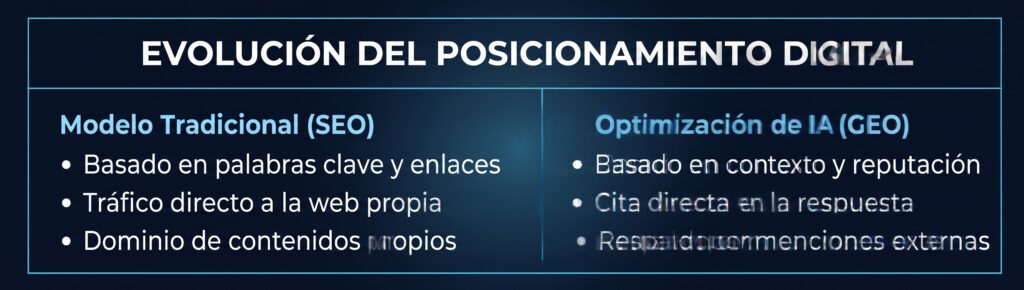
The consolidation of search engines based on generative artificial intelligence systems (Generative Engine Optimization or GEO) has transformed the way decision-makers, investors and consumers discover brands in the digital environment. The traditional search model, focused on ranking web pages through sponsored links and static keywords, is giving way to answers synthesized in real time by conversational systems. In this new architecture, a company’s visibility no longer depends solely on advertising investment (paid media) or on its own content (owned media), but on the constant presence and authority the brand has built in independent media and high-value external sources (earned media).
For communication directors, marketing managers and executive committees, understanding brand visibility in AI search engines requires re-valuing strategic public relations as the main input with which algorithms feed their knowledge and build their recommendations.
The paradigm shift: from clicks to synthesized answers
The most recurrent mistake among sales and marketing teams is to assume that conventional search engine optimization techniques (SEO) are enough to guarantee corporate presence on conversational platforms. When a user asks an artificial intelligence engine about the leaders of a sector, cybersecurity solutions or logistics trends, the system does not return a list of blue links; it generates a structured answer that cites the brands with the greatest reputation and informational backing on the web.
If an organization limits its presence to its own website and controlled digital channels, language models will process it as a self-referential source. Algorithms prioritize cross-validation: they look for press articles, industry reports, executive interviews and independent analyses to determine whether a company is a trustworthy reference in its industry.
Integrating earned media into the digital visibility strategy makes it possible to feed search engines’ data corpora with truthful information, backed by the prestige of the media.
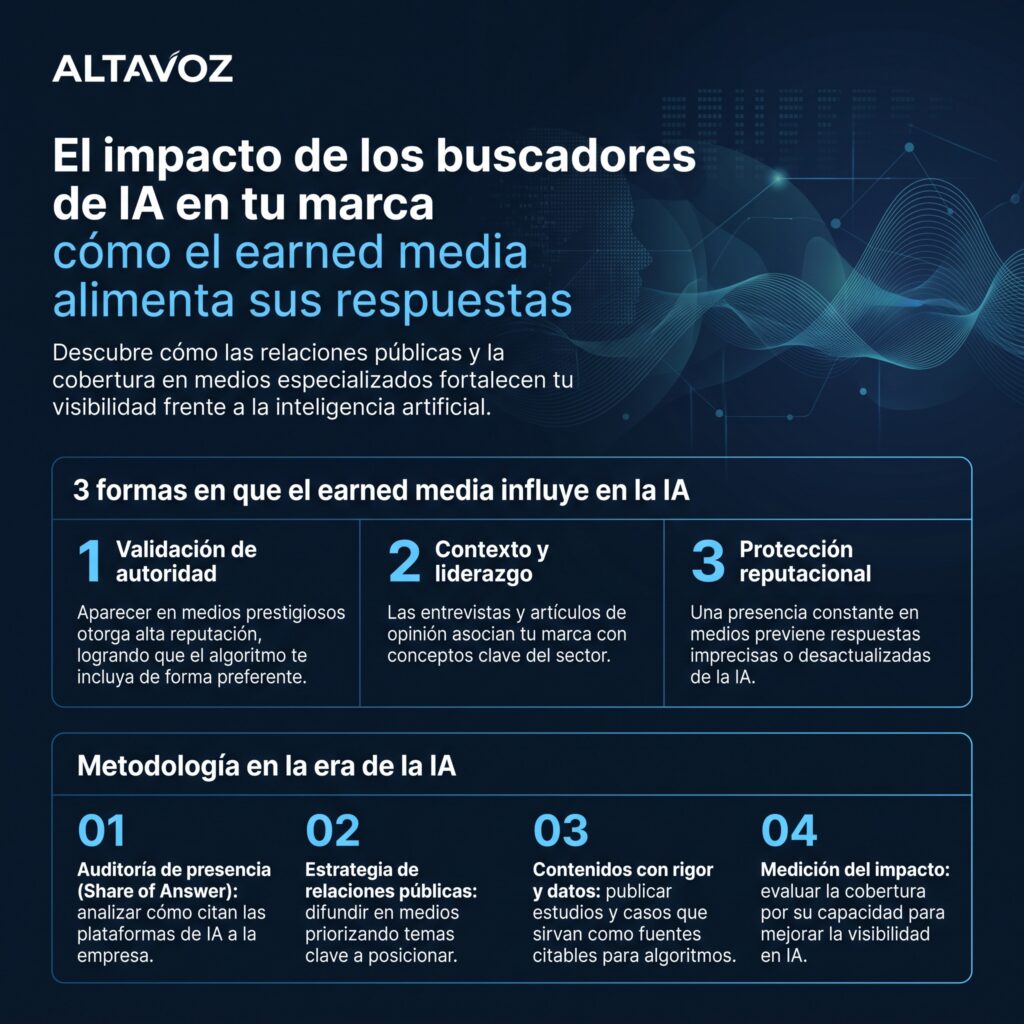
Three ways in which earned media influences AI answers
To ensure that conversational engines cite the company as an industry reference, senior management must focus its efforts on three dimensions of media coverage:
1. Authority validation through prestigious independent sources
Language models are trained to weigh the reputation of the sites where a brand is mentioned. Appearing in business newspapers, business magazines and specialized portals gives the company a high authority rating, making the algorithm include it preferentially when synthesizing sector answers.
2. Contextualizing the value proposition and executive leadership
The earned media does not only provide brand mentions; it provides semantic context. Interviews with spokespeople, opinion articles (byline articles) and stories about innovation projects teach the artificial intelligence engine exactly in which areas the organization stands out, associating the brand name with key concepts such as leadership, sustainability or digital transformation.
3. Neutralizing hallucinations and protecting reputational capital
Information gaps in external sources increase the risk of artificial intelligence generating inaccurate or outdated answers about a company. An active, constant presence in mass and specialized media creates a solid digital footprint that corrects informational deviations and protects the brand’s public perception.
Methodology for optimizing corporate presence in the age of AI
Aligning the public relations strategy with the demands of conversational search requires implementing a work process focused on four stages:
- Audit of presence in AI engines (Share of Answer): periodically query the main conversational platforms about the sector to analyze how the company is cited and which sources support those answers.
- Public relations strategy oriented to key topics: develop a media dissemination plan prioritizing the informational pillars the company seeks to position in the market.
- Generating content with technical rigor and original data: publish market studies, proprietary research and success stories that serve as citable input for journalists and algorithmic systems.
- Measuring integrated impact on reputation and search: evaluate earned media coverage not only by reach volume, but by its ability to improve citation and visibility in AI environments.
The earned media as a strategic business asset
Technological evolution reinforces the fundamental value of credibility, rigorous journalism and third-party validation.
The companies that dominate the information ecosystem of the future will be those that understand that, to be recommended by algorithms, they must first build a solid, authentic reputation backed by the real-world media.
At Altavoz Comunicaciones we advise companies and executive committees on designing and implementing comprehensive reputation, public relations and brand positioning strategies in digital environments. We support organizations in strengthening their earned media with journalistic judgment, guaranteeing a high-impact presence that strengthens market trust and ensures relevance in the age of artificial intelligence.