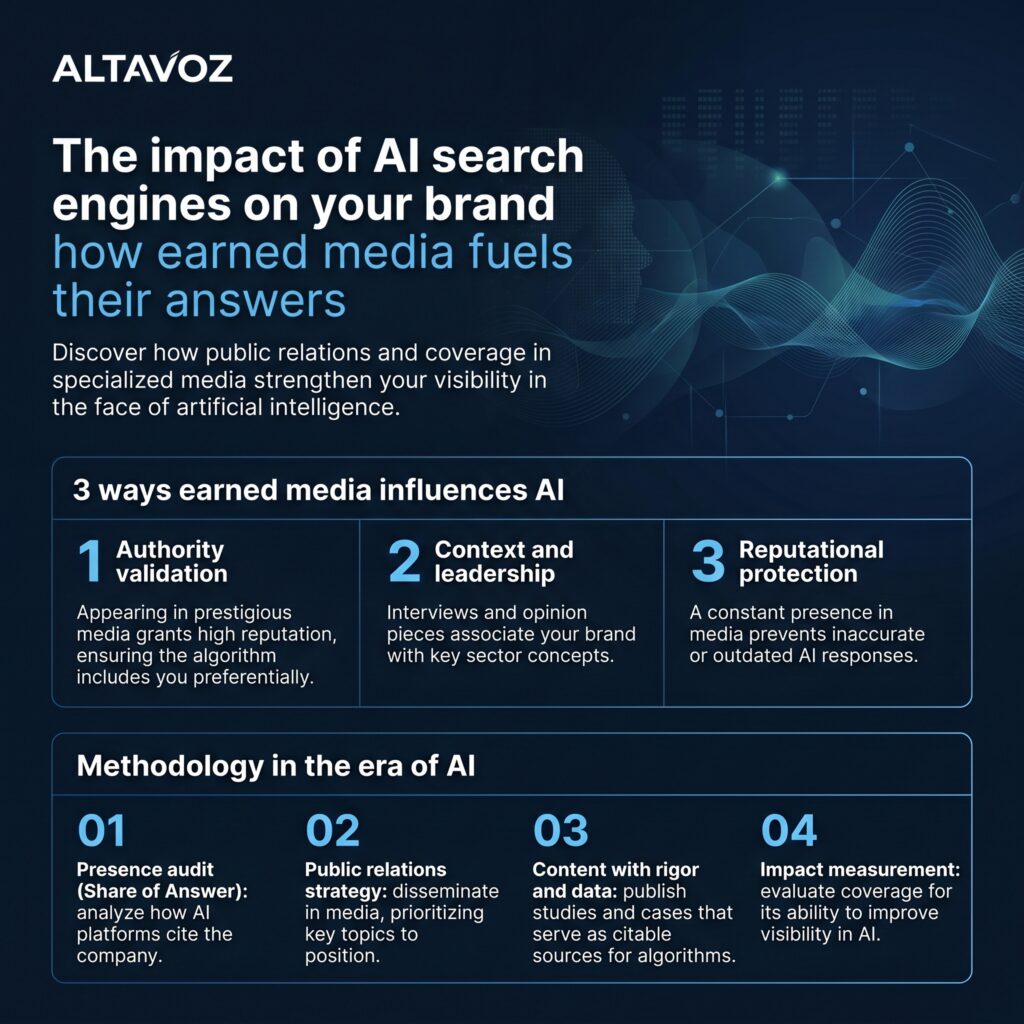
Increase the chances of your company being cited and recommended by AI-powered search tools. Discover how public relations and coverage in specialized media strengthen brand authority and help you gain visibility among potential clients and decision-makers.
The rise of artificial intelligence-based search engines (Generative Engine Optimization or GEO) has transformed how decision-makers, investors, and consumers discover brands online. The traditional search model—focused on ranking web pages through paid links and static keywords—is giving way to real-time, conversational answers. In this new architecture, a company’s visibility no longer relies solely on advertising spend (paid media) or owned channels (owned media), but on the consistent authority and presence built across independent news outlets and high-value third-party platforms (earned media).
For corporate affairs directors, marketing leads, and executive boards, mastering AI search brand visibility in PR requires treating public relations not just as a promotional tool, but as the primary data input that fuels language models and shapes corporate recommendations.
The paradigm shift: from web clicks to synthesized answers
The most common error marketing teams make is assuming that traditional Search Engine Optimization (SEO) alone guarantees corporate presence in conversational search platforms. When a user asks an AI search engine about industry leaders, cybersecurity solutions, or logistics trends, the system does not return a list of blue links; it generates a structured summary citing the most reputable, well-covered brands in the market.
If an organization restricts its visibility efforts to its owned website and branded social channels, language models treat it as a self-referential source. Algorithms prioritize third-party validation: they analyze press articles, industry reports, executive interviews, and independent reviews to determine whether a brand is a trusted market authority.
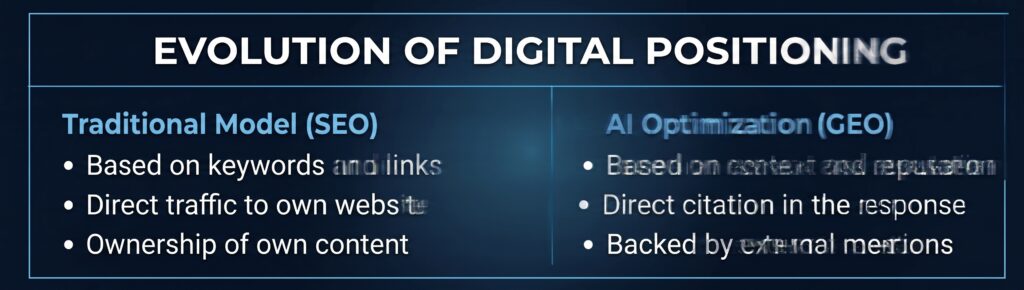
Integrating earned media into digital visibility strategies feeds AI training models and search engines with verified, high-authority information grounded in journalistic credibility.
Three ways earned media shapes AI-generated responses
To ensure conversational engines cite your organization as an industry authority, executive leadership must focus media relations across three strategic dimensions:
1. Authority validation through high-prestige independent sources
Language models are trained to evaluate the domain authority and trust metrics of the sources referencing a brand. Securing coverage in top-tier business outlets, economic journals, and trade publications signals high credibility, prompting algorithms to feature the brand prominently in industry summaries.
2. Contextualizing value propositions and executive thought leadership
Earned media provides rich semantic context alongside brand mentions. Executive interviews, byline articles, and coverage of corporate innovation teach AI engines exactly where an organization excels, pairing brand names with key industry attributes like leadership, sustainability, or digital transformation.
3. Mitigating AI hallucinations and safeguarding brand equity
Information voids across external channels increase the risk of AI platforms generating inaccurate or outdated claims about a brand. Sustained earned media coverage creates a resilient digital footprint that corrects narrative drift and protects public perception.
Methodology to optimize corporate presence in the AI search era
Aligning public relations strategy with conversational search requirements demands executing a four-stage internal management roadmap:
- AI presence auditing (Share of Answer): regularly querying conversational platforms regarding core industry topics to evaluate how the brand is cited and identify underlying source references.
- Topic-driven PR strategy: structuring press outreach around primary corporate messaging pillars to ensure high-authority external coverage aligns with strategic targets.
- Data-backed content creation: publishing proprietary research, industry benchmarks, and case studies that serve as citable assets for both journalists and AI algorithms.
- Integrated media tracking: evaluating earned media coverage not merely by reach metrics, but by its contribution to brand citation frequency across AI engines.
Earned media as a core business asset
Technological evolution reinforces the enduring value of credibility, rigorous journalism, and third-party endorsement.
The organizations that win in tomorrow’s digital ecosystem will be those that understand that to be recommended by algorithms, they must first build an authentic, authoritative reputation backed by real-world news media.
At Altavoz Comunicaciones, we advise business leaders and executive boards on designing comprehensive reputation management, public relations, and brand positioning strategies. We help organizations maximize their earned media with journalistic rigor, ensuring high-impact visibility that builds market trust and drives sustainable business growth in the AI era.